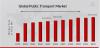
 (EMAILWIRE.COM, June 30, 2025 ) As per the latest analysis on Public Transport Market by Market Research Future, Public Transport market is projected to grow from USD 2,80,871.82 Million in 2024 to USD 4,33,249.56 million by 2032, exhibiting a compound annual growth rate (CAGR) of 5.57% during the forecast period (2023 – 2032).
The public transport market stands today at a critical junction, shaped by urbanization, sustainability mandates, technological innovation, and shifting passenger behavior. From buses and metros to ride-sharing services and micro-mobility options like e‑scooters, the market has become multi-modal and tech-driven.
Request Sample Report; https://www.marketresearchfuture.com/sample_request/8677
Key Trends in Public Transport Market
Shift Toward Sustainable and Green Mobility
Climate change awareness and emissions targets are driving a global transition to greener public transport. Fleet electrification stands out as a primary initiativecities and operators worldwide are replacing diesel buses and conventional trains with electric and hybrid models. Battery-electric buses and trams, powered by renewable energy or low‑carbon grids, are becoming commonplace.
Hydrogen fuel cell buses and trains are also emerging, especially in regions with sufficient hydrogen infrastructure. These zero-emission vehicles help cities reduce air pollution and foster environmental resilience.
Integrated Mobility-as-a-Service (MaaS)
Traditional transport systems are evolving into integrated platforms, with Mobility‑as‑a‑Service (MaaS) at the forefront. MaaS platforms combine public transit, bike‑sharing, ride‑hailing, car‑sharing, and micro-mobility in unified trip planners and payment systems. These platforms offer seamless door-to-door mobility while reducing private car dependency.
Governments and transit authorities are investing heavily in the digital backbone needed to support MaaS. The goal is to offer real-time journey planning, single-contactless ticket systems, dynamic pricing, and incentive-based options to shift commuters toward sustainable transit modes.
Smart Infrastructure and Digitalization
Smart public transport systems are about connectivity and data. Real-time scheduling, predictive maintenance, energy optimization, and dynamic routing are powered by IoT sensors and cloud infrastructure. Passenger information systems on platforms and mobile apps display accurate arrival forecasts and service alerts.
AI-driven algorithms help optimize operations and resource allocationadjusting frequencies during peak hours, dynamically deploying vehicles for special events or emergencies, and predicting ridership fluctuations. Public Wi-Fi, onboard infotainment systems, and digital fare options enhance user experience and loyalty.
Rise of Micro‑Mobility and First/Last‑Mile Solutions
Micro-mobilityshared bikes and electric scootershas exploded in urban transport. These flexible options are ideal for bridging the gap between homes and transit hubs. Many cities are now purposefully deploying bike lanes, scooter zones, and integration strategies to complement bus and rail systems.
Dockless micro-mobility, operated through smartphone apps, offers convenience and lowers dependency on private cars. As cities invest in safe pathways and digital urban management tools, micro-mobility is poised to become fully integrated into citywide transport networks.
Funding Models and PublicPrivate Partnerships
Public transport expansion and modernization often exceed government budgets alone. As a result, publicprivate partnerships (PPPs) are increasingly used to finance and operate transit projects, especially for metros, tram/rail extensions, and mobility platforms. Private investors bring innovation, efficiency, and risk-sharing, while public agencies retain oversight and equity.
Revenue models include fare revenue sharing, advertising, data licensing, and dynamic pricing. Such arrangements foster entrepreneurial ventures that can rapidly pilot and scale new services.
Public Transport Key Market Players & Competitive Insights
The Public Transport Market is characterized by the presence of many global, regional, and local vendors. The market is highly competitive, with all the players competing to gain maximum market share. Competitors in the public transport market include a wide range of organizations whose key role is to provide means of transport for the working population.
Key Companies in the Public Transport market include;
Metropolitan Transportation Authority
Transport for London
MRT Corporation
Chicago Transit Authority
Madrid Metro
Massachusetts Bay Transportation Authority
The Washington Metropolitan Area Transit Authority
Seoul Metro
Bay Area Rapid Transit (BART)
The San Diego Metropolitan Transit System
Buy Complete Report; https://www.marketresearchfuture.com/checkout?currency=one_user-USD&report_id=8677
Regional Analysis
North America
Public transport in North America spans a wide spectrum. Major metropolitan areassuch as New York, Toronto, and Chicagocontinue to invest in subway and light rail systems, while mid-sized and smaller cities rely heavily on bus and commuter rail networks. Ridership recovered unevenly after the pandemic, with renewed focus on safety, contactless payment, and enhanced cleaning schedules.
Emphasis is growing on electrifying bus fleets, with several major cities targeting net-zero public transport systems by 2040. In parallel, micro-mobility options are being added to fill last-mile gaps in urban cores.
Europe
Europe remains a leader in sustainable and integrated public transport. Extensive rail and tram networks, high levels of ridership, and tight environmental regulations encourage continued investment in electric fleets and MaaS platforms. Scandinavian countries and the Netherlands are rolling out hydrogen-powered buses and investing in digital transit services.
Cross-border mobilitybetween EU countriesis increasingly seamless via integrated ticketing systems and real‑time transit data, enabling combined journeys using trains, buses, bike-share programs, and ride-hailing.
Asia-Pacific
The Asia-Pacific region is the fastest-growing market for public transport, fueled by rapid urbanization and population growth. China, India, Southeast Asia, and Australia are expanding metro rail, bus rapid transit (BRT), and commuter rail systems. China leads in electric bus fleets and high-speed intercity rail, while India focuses on metro extensions and affordable bus infrastructure.
Ride-hailing, dockless bikes, and e-scooters have taken off in Southeast Asian capitals like Jakarta, Bangkok, and Ho Chi Minh Citycomplemented by significant digital-native transit solutions.
Latin America & Middle East/Africa
These regions are diversifying transport options amid infrastructure improvements and growing urban centers. Latin American cities like Bogotá and Santiago are expanding BRT corridors alongside conventional buses. In the Middle East, well-funded investments in metro systemssuch as those in Dubai, Doha, and Riyadhare part of broader smart city ambitions.
African cities are piloting BRT and ride-sharing integrations, often supported by international aid and climate-led funding schemes. However, challenges remain with informal transit segments and financing.
Explore Further Public Transport Market Insights; https://www.marketresearchfuture.com/reports/public-transport-market-8677
Recent Developments
Acceleration of Electrification Efforts
Public transit agencies are racing to remove diesel vehicles from their fleets. Major cities are debuting all-electric bus or tram fleets, with infrastructure like fast-charger depots now standard. Hydrogen transit pilots are underway in select European and Asian cities.
MaaS Pilots and Expanded Ticketing Integration
Several cities are launching MaaS apps that integrate transit, rideshare, bikeshare, and scooters with a single subscription or fare system. These pilots enable mobility credits, subscription models, and reward programs for multi-mode usage.
AI and Predictive Analytics Adoption
Transit agencies are deploying AI to forecast ridership, detect maintenance needs, and adjust schedules dynamically. This boosts efficiency while reducing operational costs. Predictive models help schedule cleaner deployments, reduce breakdowns, and enhance passenger safety along pinch point routes.
COVID-19 Resilience focused Innovations
Although ridership dipped during the pandemic, agencies recovered using contactless boarding, advanced sanitation, and adaptive schedule planning. Public Transit Principles now include health, resilience, and social inclusion as design pillars. Future expansions feature more adaptable rolling stock and modular infrastructure easily reconfigured for health emergencies.
Last‑Mile and Accessibility Enhancements
Many cities are ramping up pedestrian and bike-friendly infrastructure and adding on-demand paratransit services. Programs like subsidized bike‑share, scooter discounts, and dynamically routed mini‑buses are rolling out in suburbs and lower-density zones.
Challenges and Outlook
While public transport continues to evolve, several hurdles persist:
Funding and Pricing Pressures: Low fare revenues coupled with rising operational costs require subsidies, innovative revenue streams, or dynamic pricing strategies.
Equity and Social Inclusion: Ensuring that marginalized and rural populations receive adequate access to transit remains a priority.
Technology Risks: Issues around data privacy, interoperability of systems, and digital inclusion must be managed carefully.
Infrastructure Modernization: Aging rail systems and station bottlenecks need urgent upgrades, especially in legacy cities.
Looking forward, public transport is poised to become cleaner, smarter, and more user-centric. Expectations include fully electric fleets in most major cities over the next decade, improved service availability across socioeconomic groups, and seamless integration of modes via universal digital platforms.
The public transport market is transforming into a multi-functional, green, and digitally connected ecosystem. The rise of MaaS, electrification, and micro-mobility are redefining city travel. While regional markets differ in maturity and funding models, the trajectory across the board points toward sustainable, inclusive, and tech-enabled systemsredefining public transport as a backbone of modern urban life.
Related Reports
Electric Truck Market
Golf Cart Market
Used Vehicle Market
Battery Management System for Electric Vehicles Market
market research future.
Market Research Future
+1 (646) 845 9349
sales@wiseguyreports.com
Source link